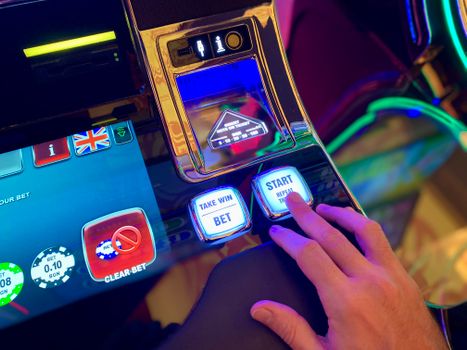
The European casino landscape has experienced a dramatic transformation in the past two decades. Once dominated by glittering brick-and-mortar venues in cities like Monte Carlo, Baden-Baden, and London, the continent now witnesses a surging migration of gamblers from plush carpets and roulette wheels to digital screens and live streams. This shift from physical to online casinos in Europe is more than just a technological trend—it's reshaping how millions of Europeans experience entertainment, risk, and reward.
What are the driving forces behind this evolution? How are traditional casinos responding? And what does the data reveal about players’ preferences? This in-depth exploration investigates the dynamics, consequences, and future of Europe’s casino revolution.
The Growth Trajectory: Data Behind Europe’s Online Casino Boom
The numbers tell a compelling story. In 2010, online gambling accounted for just 12% of Europe’s total gambling market. By 2022, according to the European Gaming and Betting Association (EGBA), this figure had more than doubled to 33%, with online gross gaming revenue (GGR) reaching €38.2 billion out of a total €114.5 billion for the European market.
.png)
A closer look at the top markets demonstrates the speed and scale of digital adoption:
- The United Kingdom remains the largest online gambling market in Europe, with over 30% of its gambling activity now online. - In Sweden, over 60% of gambling is conducted online, propelled by liberal licensing and digital-first operators. - Germany saw online casino GGR rise by 28% in 2022 alone, following new national regulations.COVID-19 lockdowns in 2020 and 2021 accelerated this shift. Land-based casino revenues dropped by 32% in 2020, while online gambling increased by 13% the same year. Although brick-and-mortar venues have recovered partially, the momentum for online play has not abated.
Key Drivers Fueling the Digital Casino Revolution
Several factors have combined to turbocharge the migration from physical to online casinos in Europe:
1. $1: The rise of smartphones and high-speed internet allows players to access games anywhere—on a commute, at home, or even while traveling. In 2022, over 75% of European online gambling took place on mobile devices. 2. $1: Younger adults, particularly the 18-35 demographic, prefer digital experiences. According to a 2021 survey by Statista, 58% of European online gamblers were aged between 18 and 34. 3. $1: Countries like Sweden, Denmark, and the UK have implemented robust online gambling regulations, making it easier for operators to launch legal, safe platforms. Germany’s 2021 State Treaty on Gambling is another example, legalizing and standardizing online casino operations nationwide. 4. $1: Online casinos offer thousands of slot titles, live dealer games, and instant wins—far more than any physical venue. Features like progressive jackpots, gamification, and bonuses keep players engaged. 5. $1: Temporary closures and restrictions on physical casinos forced both operators and customers to explore online alternatives, expediting a trend that was already underway.A Side-by-Side Comparison: Physical vs. Online Casinos in Europe
To better understand the evolution, let’s compare the two formats across crucial criteria:
| Criteria | Physical Casinos | Online Casinos |
|---|---|---|
| Access & Convenience | Location-limited; travel required | 24/7 access from anywhere with internet |
| Game Variety | Hundreds of games, space-dependent | Thousands of titles, unlimited by space |
| Atmosphere & Social Experience | Luxurious, social, immersive | Virtual, can be solitary or social (live dealers) |
| Bonuses & Promotions | Limited to comps, free drinks, or rooms | Frequent bonuses, free spins, loyalty rewards |
| Regulation | Heavily regulated, country-specific | Regulated, but varies by country; cross-border access |
| Player Demographics | Older, traditional clientele | Younger, tech-savvy users |
While physical casinos continue to offer a unique, tactile experience, their digital counterparts are outpacing them in accessibility, game range, and promotional incentives.
Impact on Traditional European Casinos and Urban Economies
The rise of online casinos has not come without consequences for traditional gambling venues and their host cities. European casino hubs such as Monte Carlo, Estoril, and Baden-Baden have long contributed to local economies by attracting tourists, creating jobs, and supporting hospitality businesses.
However, declining foot traffic is prompting these venues to rethink their strategies:
- In France, the number of annual casino visitors fell from 33 million in 2017 to 25 million by 2022, according to the French Casino Association (CASINO). - Employment in land-based European casinos dropped by 18% between 2019 and 2021. - Iconic venues like Casino di Venezia and Casino Estoril have invested in hybrid models, incorporating online play and live-streamed games to retain relevance.Cities that rely on gambling for tourism revenue face a pressing need to diversify their attractions. Some venues have responded by expanding into broader entertainment, hosting concerts, conventions, and gourmet dining experiences to attract visitors beyond gamblers.
Regulatory Evolution and Consumer Protection in the Digital Age
Europe’s regulatory landscape has had to adapt quickly to the explosion of online gambling. The focus has shifted toward ensuring player safety, combating problem gambling, and preventing money laundering.
Key regulatory trends include:
- $1: The UK’s GAMSTOP and Sweden’s Spelpaus allow players to voluntarily ban themselves from all licensed online gambling platforms. - $1: Italy and Spain have implemented strict limits on gambling advertising, especially targeting vulnerable groups. - $1: Enhanced Know Your Customer (KYC) and Anti-Money Laundering (AML) protocols are now mandatory for all licensed operators. - $1: The EU encourages cooperation between member states, but regulations and tax regimes still vary widely. For example, Malta issues licenses recognized across the EU, while Germany imposes strict local controls.Despite these efforts, the European Gaming and Betting Association estimates that up to 17% of all online gambling in Europe still occurs via unlicensed operators, highlighting ongoing challenges.
The Future of Casino Gaming in Europe: What’s Next?
Looking ahead, the casino industry in Europe is set to be further transformed by emerging technologies and shifting consumer habits.
- $1: Several operators are piloting VR casino experiences, promising immersive environments that blend the social and entertainment value of land-based venues with digital convenience. - $1: The adoption of crypto wallets and blockchain-based games is growing, especially among younger players seeking privacy and innovative gameplay. - $1: Artificial intelligence is being used to tailor game recommendations, manage risk, and detect problem gambling behaviors in real time. - $1: New tools are being developed to help players manage their activity, set limits, and access support services instantly.Traditional casinos will likely continue to evolve, integrating online offerings and focusing on unique, luxury experiences that cannot easily be replicated online. Meanwhile, online platforms will keep expanding their reach, driven by innovation, regulatory clarity, and customer demand.
Key Takeaways: Europe’s Casino Landscape in Transition
The shift from physical to online casinos in Europe is not a simple story of one format replacing another. Instead, it reflects a complex, technology-driven transformation of how Europeans choose to play, socialize, and seek entertainment.
Physical casinos remain symbols of luxury and excitement, but their digital rivals offer unmatched convenience, variety, and innovation. For consumers, this means more choice than ever; for regulators and operators, it signals the need for continual adaptation.
As Europe moves forward, the casino industry will likely continue to blend the best of both worlds—offering seamless, secure, and engaging experiences for every type of player.