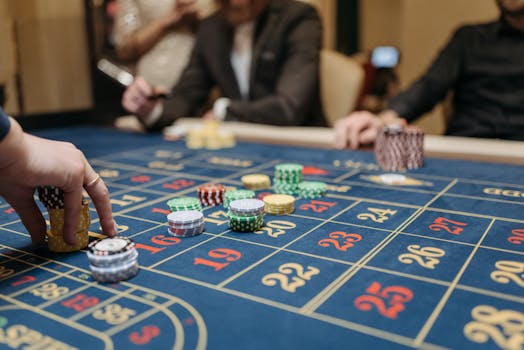
The story of gambling in Japan is a fascinating odyssey stretching from the shadows of mythic antiquity to the dazzling, neon-lit promise of modern integrated resorts. While Japan is often associated with a culture of restraint and regulation, games of chance have been deeply woven into the nation’s social and economic fabric for centuries. Yet, the legal status, cultural meaning, and social acceptance of gambling have shifted dramatically across different eras. In this article, we journey through the history of gambling in Japan—exploring the evolution from ancient pastimes and illicit bets to today’s government-regulated lotteries and the recent, controversial embrace of casino resorts.
Ancient Roots: Gambling in Early Japanese Society
Gambling in Japan can be traced back over a millennium. Archaeological records and historical texts suggest that the Japanese have engaged in games of chance since at least the Nara period (710–794 AD). Dice games, known as "Sugoroku," were already popular by the Heian period (794–1185 AD). Sugoroku came in two main variants: "Ban-sugoroku" (board sugoroku), resembling backgammon, and "E-sugoroku," a simpler racing game.
Emperors and shoguns frequently banned sugoroku and other gambling activities, fearful of their perceived corrosive effects on discipline and public morals. Despite repeated prohibitions, these games remained popular among both the nobility and the commoners, often played in secret.
.png)
By the Muromachi period (1336–1573), betting on animal fights—such as cockfighting, dogfighting, and later, cricket fighting—gained popularity. These were often associated with religious festivals and social gatherings, reflecting a complex relationship between entertainment, ritual, and gambling.
Gambling in the Edo Period: Regulation and Popularization
The Edo period (1603–1868) saw a surge in new forms of gambling, particularly in rapidly growing urban centers like Edo (modern Tokyo), Osaka, and Kyoto. The Tokugawa shogunate maintained strict laws against gambling, but these were frequently flouted. Gambling houses (“bakuchi-ba”) proliferated in the entertainment districts, often operated by organized crime groups known as “bakuto.”
During this era, "hanafuda" (flower cards) and "cho-han" (a dice game) became immensely popular. Hanafuda, a card game with origins in imported Portuguese playing cards, was especially notable because its development was a direct response to government bans on traditional playing cards. The ingenious Japanese workaround was to create new, uniquely Japanese cards that authorities would not recognize as gambling paraphernalia.
The culture of gambling became more visible and complex. For example, kabuki theatre often depicted gamblers as romantic anti-heroes. The government, recognizing both the limits of enforcement and the revenue potential, sometimes tolerated small-stakes gambling, especially in festival contexts.
State Control and Social Stigma in Modern Japan
With the Meiji Restoration in 1868 and the modernization of Japan, the government sought to align the country with Western legal and moral standards. In 1907, Japan’s Criminal Code officially banned most forms of gambling, with only a few exceptions: public lotteries, certain sports betting (notably horse racing), and small-scale private games.
This strict legal stance shaped the character of Japanese gambling for decades. Pachinko, a vertical pinball-like game invented in the 1920s, rapidly became the nation’s most popular gambling pastime. While technically classified as “amusement,” the pachinko industry grew into a behemoth: by 2022, Japan had over 7,600 pachinko parlors, and the market was estimated at ¥14.6 trillion (over $100 billion USD annually).
Despite its popularity, gambling has long carried a social stigma in Japan, linked to criminality and personal ruin. This stigma is reinforced by the association of illegal gambling dens with yakuza (organized crime syndicates). However, government-run forms like "Takarakuji" (lottery) and public sports betting (on horse racing, cycling, powerboat, and motorcycle racing) are seen as more socially acceptable.
The table below compares the main legal gambling options in contemporary Japan:
| Type | Legal Status | Annual Market Size (2022) | Operator |
|---|---|---|---|
| Pachinko | Permitted (quasi-legal) | ¥14.6 trillion ($112B USD) | Private sector |
| Public Lotteries (Takarakuji) | Legal | ¥869 billion ($6.7B USD) | Government |
| Horse Racing | Legal (regulated) | ¥2.8 trillion ($21.5B USD) | Japan Racing Association |
| Other Sports Betting | Legal (regulated) | ¥1.5 trillion ($11.5B USD) | Government/Private |
| Casinos | Legal (since 2018) | Not operational yet | Private/Public partnership |
Pachinko: The Unique Face of Japanese Gambling
No exploration of Japanese gambling history is complete without a close look at pachinko. Although technically not classified as gambling under the law, pachinko occupies a grey area. Players win small steel balls, which can be exchanged for prizes within the parlor. To circumvent anti-gambling laws, players then exchange these prizes for cash at separate, nearby businesses.
At its peak in the mid-1990s, the pachinko industry accounted for nearly 5% of Japan’s GDP. Even today, despite a declining player base, it remains a major entertainment and economic force. In 2022, Japan’s pachinko industry employed an estimated 240,000 people and attracted millions of regular players.
Culturally, pachinko parlors are ubiquitous—from neon-lit city centers to rural towns. The game is deeply embedded in daily life, yet it is also a source of controversy, with concerns about addiction, money laundering, and links to organized crime. Government attempts to regulate pachinko have had limited success, underscoring the complexity of Japan’s relationship with gambling.
The Casino Debate: Legalization and the Future of Gambling in Japan
For decades, the idea of legalized casino gambling was taboo in Japan. That began to change in the early 21st century, as policymakers eyed the potential economic windfall from integrated resorts (IRs)—large complexes combining casinos, hotels, shopping, and conference centers.
In July 2018, after years of debate, Japan’s Diet (parliament) passed the Integrated Resort Implementation Act. This law authorized the establishment of up to three casino resorts, with the first expected to open in the late 2020s. The government projects that these IRs could generate up to ¥1.5 trillion ($11 billion USD) annually in economic impact and create tens of thousands of jobs.
The move is not without controversy. Opinion polls consistently show that a majority of Japanese citizens are wary of casinos, citing fears of increased crime, problem gambling, and social disruption. To address these concerns, Japan’s regulatory framework is among the strictest in the world, including:
- A cap on the number of casino visits by locals (three times per week, ten times per month) - An entry fee for Japanese residents (¥6,000, or about $40 USD) - Comprehensive background checks for operators - Strict advertising limitsMajor global casino operators have shown keen interest in Japan’s market, drawn by the country’s affluent population and international tourism appeal. The first IR license was awarded to Osaka in 2023, with the resort expected to open in 2029.
Cultural Attitudes: Gambling in Japanese Literature, Film, and Society
Gambling has long been a powerful motif in Japanese culture, reflecting themes of fate, risk, and resistance to authority. Classic kabuki and literature often cast the gambler as a tragic, romantic figure, defying social norms in pursuit of fortune or redemption. Modern works—such as the manga and anime series "Kaiji" and "Akagi"—depict the psychological intensity and moral ambiguities of high-stakes gambling.
Despite legal restrictions, surveys indicate that about 50% of Japanese adults participate in some form of gambling each year, predominantly via pachinko or lotteries. At the same time, public discourse remains ambivalent, balancing the economic benefits of regulated gambling against concerns over addiction and social harm. The Japan Agency for Integrated Resorts (JAIR) has been tasked with developing responsible gambling programs, aiming to minimize negative consequences as the casino era dawns.
Looking Ahead: Japan's Gambling Landscape in the 21st Century
The history of gambling in Japan is a story of adaptation, invention, and negotiation between tradition and modernity. From ancient dice games and forbidden dens to the sprawling pachinko parlors and the forthcoming casino resorts, gambling has continually shaped—and been shaped by—Japanese society.
As Japan embarks on its bold casino experiment, the nation faces a pivotal moment. Will the integrated resorts revitalize local economies and attract global tourists, or will they spark new social challenges? The answer will hinge on careful regulation, public engagement, and an honest reckoning with both the allure and the risks of games of chance. What is certain is that gambling, in all its forms, will remain an indelible part of Japan’s cultural and economic tapestry for generations to come.