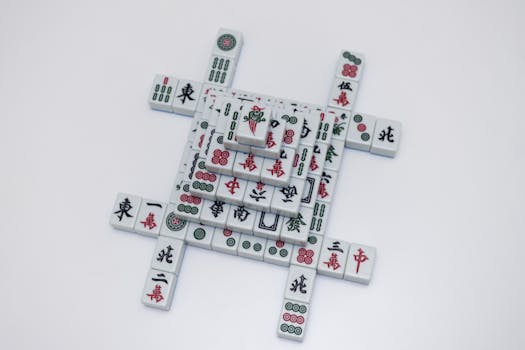
Mahjong has captivated millions worldwide, but nowhere is its cultural imprint quite as unique as in Japan. While the game originated in China, Japan has embraced and transformed mahjong into a social, strategic, and even pop-cultural phenomenon. In modern Japanese society, mahjong is more than just a pastime—it’s a competitive sport, a social glue, and a pop-culture icon. This article will decode the enduring popularity of mahjong in Japan by tracing its history, examining its unique Japanese variant, exploring its role in social and digital landscapes, and considering its portrayal in media and competitive arenas.
The Journey of Mahjong: From Chinese Roots to Japanese Reinvention
Mahjong was introduced to Japan from China in the early 20th century, reportedly around 1924. Initially, it closely resembled the Chinese version, but over time, the Japanese adapted the rules and gameplay to suit their own cultural tastes. The key differences between Japanese mahjong (also called "Riichi Mahjong") and its Chinese counterpart include the addition of the riichi declaration (a bet that the player is one tile away from winning) and the concept of dora tiles, which add an extra layer of point-scoring and unpredictability.
By the 1950s and 1960s, mahjong had become deeply woven into the fabric of Japanese entertainment culture. It was played in smoky parlors across urban centers, enjoyed by salarymen seeking relaxation and camaraderie after work. According to the Japan Mahjong Organizing Committee, by the late 1970s, there were over 30,000 mahjong parlors across Japan. While this number has declined with changing times and regulations, mahjong remains a highly visible and popular pursuit.
.png)
Unique Features of Japanese Mahjong: Rules, Scoring, and Strategy
Japanese mahjong sets itself apart with distinctive rules and a highly strategic approach. The game is typically played by four people, with each aiming to complete a winning hand by drawing and discarding tiles. Several key differences distinguish Japanese mahjong:
- Riichi: Players may declare "riichi" when they are one tile away from victory, staking a 1,000-point bet for a chance at higher rewards. - Dora Tiles: Special bonus tiles (dora) are revealed, increasing the value of certain hands and adding unpredictability. - Yaku: To win, a player’s hand must meet specific patterns or conditions, known as yaku, which encourage more thoughtful play. - Furiten: A unique rule that prevents a player from winning off a discard if they have previously discarded a winning tile.The scoring system in Japanese mahjong is intricate. Winning hands are valued using a combination of "han" (multipliers based on yaku and dora) and "fu" (base points based on the structure of the hand). This complexity appeals to strategic thinkers and makes each game unique.
To illustrate the differences between Japanese mahjong and other variants, consider the following comparison:
| Feature | Japanese (Riichi) Mahjong | Chinese (Hong Kong) Mahjong | American Mahjong |
|---|---|---|---|
| Players | 4 | 4 | 4 |
| Main Unique Rule | Riichi declaration, Dora tiles | Flower tiles, simpler yaku | Special cards, joker tiles |
| Scoring Complexity | High (han & fu system) | Moderate | High (card-based hands) |
| Professional Scene | Yes, with leagues and televised matches | Limited | Primarily amateur |
Mahjong in Everyday Japanese Life: From Parlors to Living Rooms
Mahjong’s popularity in Japan is not confined to official tournaments or smoky parlors—it is a fixture in both public and private life. At its peak in the 1980s, an estimated 7 million Japanese played mahjong regularly. While the number of parlors has decreased due to stricter gambling regulations and changing social habits, the game remains a favorite social activity at home, in senior centers, and even in university clubs.
Parlors, known as "jansō," still dot the urban landscape, especially in entertainment districts in cities like Tokyo and Osaka. According to the Japan National Police Agency, as of 2021, there were over 8,000 registered mahjong parlors nationwide. These establishments have evolved—many now ban smoking, offer food and drinks, and even cater to women and younger clientele.
Mahjong also holds a special place among Japan’s elderly population. A 2019 survey by the Japanese Ministry of Health, Labour and Welfare found that 22% of citizens over 65 had played mahjong in the preceding year. For many retirees, the game is a way to stay mentally active and socially engaged, with some studies suggesting that regular mahjong play can help stave off cognitive decline.
Mahjong’s Digital Revival: Online Platforms and Mobile Apps
While traditional jansō have seen a gradual decline, mahjong has experienced a digital rebirth. Online mahjong platforms and mobile apps have made the game accessible to new generations and international fans. Major platforms like Tenhou and Mahjong Soul boast millions of registered users. Tenhou, for example, reported over 500,000 monthly active users in Japan in 2023, while Mahjong Soul has partnered with anime studios to further popularize the game.
These digital platforms host regular tournaments, offer ranked play, and provide detailed analytics of player performance. They also connect global players, making Japanese rules and strategies more widely known than ever before. The COVID-19 pandemic further accelerated this trend, as in-person gatherings became difficult and online play soared.
In addition, mahjong video games have become a staple on consoles and PCs. Sega’s "Ryu Ga Gotoku" (Yakuza) series and Konami’s "Mahjong Fight Club" are just two examples where mahjong is woven into the gameplay, reaching audiences who may never have entered a traditional parlor.
Mahjong in Japanese Media and Pop Culture
Mahjong’s presence in Japanese media cannot be overstated. The game is a recurring motif in manga, anime, film, and television. A prime example is the iconic manga and anime "Akagi," which tells the story of a teenage mahjong prodigy navigating high-stakes games against the underworld. "Saki," another popular manga/anime, centers on high school girls competing in mahjong tournaments, blending drama with detailed explanations of gameplay.
Mahjong is often used as a metaphor for strategy, cunning, and the unpredictability of life—traits highly valued in Japanese storytelling. It is not uncommon for dramatic television shows to feature pivotal scenes at the mahjong table, symbolizing confrontation, negotiation, or risk-taking.
The game’s association with yakuza culture in media has added to its allure, giving it an edgy, rebellious image that both attracts and fascinates audiences. Meanwhile, public figures and celebrities, including manga authors and actors, occasionally reveal their passion for mahjong, further cementing its place in the cultural mainstream.
Professional Leagues and Competitive Mahjong in Japan
Mahjong has evolved into a serious competitive sport in Japan, complete with professional leagues, televised tournaments, and even celebrity players. The Japan Professional Mahjong League (JPML), established in 1981, is one of the largest organizations, boasting over 400 members. There are also women-only leagues, such as the Japan Women’s Professional Mahjong League (JWPMJL), which are helping diversify and expand the game’s appeal.
Televised tournaments, such as those broadcast by M.League, attract hundreds of thousands of viewers. M.League, launched in 2018, has revolutionized competitive mahjong by introducing a team-based league format backed by major Japanese corporations. In its 2022 season, M.League boasted a total online viewership exceeding 35 million, a testament to mahjong’s enduring appeal.
Prize money has also grown significantly. Top players in M.League can earn annual salaries exceeding ¥10 million (about $70,000 USD), with additional winnings from tournament prizes and sponsorships. This professionalization has inspired a new generation of players to pursue mahjong not just as a hobby but as a legitimate career.
Enduring Appeal: Why Mahjong Remains a Cultural Staple in Japan
The ongoing popularity of mahjong in Japan can be attributed to several factors. Its adaptable rules, deep strategy, and social nature keep players engaged across generations. The game’s presence in media and pop culture ensures that it remains relevant, while digital platforms allow it to evolve with the times.
Mahjong’s role as a social equalizer—played by young and old, men and women, celebrities and retirees—has helped it weather social and demographic changes. Its mental challenges are praised for keeping minds sharp, and its competitive aspects appeal to those seeking both camaraderie and rivalry.
As Japan continues to blend tradition with innovation, mahjong stands as a testament to the nation’s ability to embrace, adapt, and celebrate games that bring people together.