Macau, a Special Administrative Region of China, has transformed dramatically over the past two decades. Once a sleepy port city with a modest gambling scene, it is now hailed as the "Las Vegas of Asia" and the world’s largest gambling hub. The rise of casino resorts has brought about an economic revolution, reshaping not only Macau's skyline but also its GDP, labor market, public infrastructure, and global influence. But just how profound is the economic impact of casino resorts in Macau? This article explores the numbers, the ripple effects, and the unique challenges that come with relying on a single industry for prosperity.
The Rise of Macau’s Casino Resorts: A Brief Overview
Macau’s journey as a gambling haven began in the mid-19th century when the Portuguese colonial government legalized gambling. For over a century, the region held a monopoly on legal gambling in the Far East. However, it wasn't until 2002, when the government ended the monopoly and allowed foreign casino operators, that Macau’s fortunes skyrocketed.
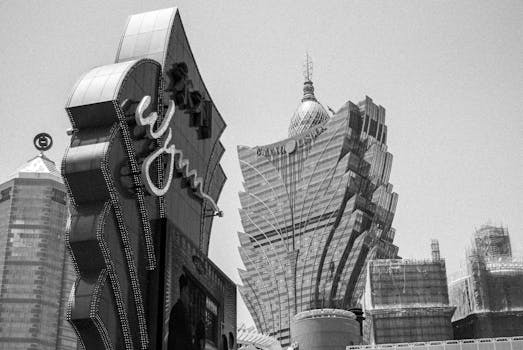
Since then, international giants like Sands China, Wynn Macau, and Galaxy Entertainment have poured billions into sprawling integrated resorts. The result? By 2019, Macau’s gaming revenue reached a staggering $36.5 billion USD—nearly six times that of Las Vegas. Casino resorts, combining luxury hotels, shopping, entertainment, and gaming under one roof, have become the lifeblood of Macau’s economy.
.png)
Casino Resorts and Macau’s GDP: The Backbone of Prosperity
The economic significance of casino resorts in Macau cannot be overstated. According to the Statistics and Census Service (DSEC) of Macau, the gaming industry accounted for an estimated 55% of the region’s GDP in pre-pandemic years. In 2013—the peak before the anti-corruption crackdown in Mainland China—gaming revenues hit $45 billion USD, making up over 80% of government tax receipts.
To illustrate the scale, consider this:
- In 2019, Macau’s GDP per capita was $86,117 USD, ranking among the world’s highest, largely due to casino-driven growth. - In the same year, over 76,000 people—about 20% of the workforce—were directly employed by the gaming and hospitality sectors. - Taxes from casino operations made up more than 70% of Macau’s public revenue, enabling the region to invest heavily in infrastructure, healthcare, and education.The table below compares Macau’s casino revenue and GDP contribution with other major casino destinations:
| Region | Annual Casino Revenue (2019, USD) | Gaming as % of GDP | Population (approx.) |
|---|---|---|---|
| Macau | $36.5 billion | 55% | 680,000 |
| Las Vegas (Clark County) | $6.6 billion | 7% | 2,300,000 |
| Singapore | $4.8 billion | 2% | 5,700,000 |
This data highlights the extraordinary dependence of Macau’s economy on its casino resorts—far more than any other comparable region.
Employment, Wages, and Social Mobility in Macau
Casino resorts are not just glittering landmarks—they are major employers and engines of upward mobility in Macau. According to Macau’s Labour Affairs Bureau, by the end of 2019, the gaming and hospitality sector employed more than 76,000 people. This sector offers a wide range of jobs, from dealers and pit bosses to hotel managers, chefs, security staff, entertainers, and retail workers.
Wages in the casino sector are notably higher than the local average. For example:
- In 2019, the median monthly wage for casino dealers was MOP 20,000 (about $2,500 USD), compared to the overall median wage of MOP 17,000 ($2,125 USD). - Many casino operators offer extensive training programs, scholarships, and internal promotion opportunities, helping local residents climb the economic ladder.The influx of jobs has also attracted migrant workers, primarily from Mainland China, the Philippines, and Southeast Asia—adding to Macau’s cultural diversity but also raising questions about social integration and housing pressures.
Public Revenues and Infrastructure: Macau’s Casino-Fueled Transformation
The massive tax revenues generated by casino resorts have enabled the Macau government to pursue ambitious public spending. In 2018 alone, taxes from gaming contributed MOP 106.8 billion (nearly $13.2 billion USD) to public coffers.
With these funds, Macau has:
- Built modern hospitals and expanded healthcare access - Developed a world-class public transport system, including the Macau Light Rapid Transit - Upgraded roads, bridges, and border facilities - Invested in public housing and social welfare schemes - Supported cultural preservation projects, such as restoring UNESCO World Heritage sitesResidents benefit directly, too. Each year, the government distributes a "wealth partaking" cash handout to permanent and non-permanent residents—MOP 10,000 ($1,250 USD) and MOP 6,000 ($750 USD) respectively in 2023.
Tourism and the Broader Economic Ripple Effect
Casino resorts are at the heart of Macau’s tourism boom. In 2019, Macau welcomed 39.4 million visitors, with over 70% coming from Mainland China. Most visitors come for gaming, but the integrated resort model means they also spend on hotels, dining, shopping, shows, and local attractions.
This has created a multiplier effect:
- In 2018, non-gaming revenue (hotels, retail, entertainment) accounted for 14% of the integrated resorts’ total revenue, up from just 6% in 2006. - Macau’s luxury retail market has thrived, making it the world’s third-largest duty-free shopping destination after Dubai and Seoul. - The city has become a popular venue for international conventions, concerts, sporting events, and Michelin-starred dining.Small and medium enterprises (SMEs) in hospitality, retail, transportation, and services have flourished as a result of the casino-driven tourism ecosystem.
Risks and Challenges: Economic Overdependence and Diversification
While the economic impact of casino resorts in Macau has been overwhelmingly positive, it comes with significant challenges:
1. Overdependence: With more than half of GDP linked to gaming, Macau is highly vulnerable to external shocks. The anti-corruption campaign in China (2014-2016) and the COVID-19 pandemic (2020-2022) both triggered sharp declines in visitor arrivals and casino revenues, causing GDP to contract by over 50% in 2020. 2. Diversification: The Macau government and Beijing have repeatedly called for economic diversification. Efforts include promoting non-gaming tourism, developing financial services, and supporting high-tech industries. However, progress has been slow—non-gaming activities still account for less than 20% of total revenue for most casino operators. 3. Social Costs: Rapid economic growth has led to soaring property prices, income inequality, and concerns about problem gambling. The government has introduced responsible gaming programs, but social pressures persist. 4. Regional Competition: Neighboring regions like Singapore, the Philippines, and Japan are expanding their own casino industries, vying for a share of Asia’s lucrative gaming market.The Future of Macau’s Casino Economy
Macau faces a crossroads as it emerges from the pandemic and adapts to new regulatory expectations from Beijing. The government has renewed casino licenses with stricter conditions, emphasizing responsible gaming, local employment, and increased non-gaming investments.
Integrated resorts are responding by:
- Expanding convention and exhibition spaces - Investing in family-friendly entertainment and cultural attractions - Launching wellness, sports, and digital experiences - Partnering with local businesses and educational institutionsWhether Macau can successfully reinvent itself as more than just a gambling destination will determine the long-term sustainability of its economic miracle.
Final Thoughts on the Economic Impact of Casino Resorts in Macau
The story of Macau’s casino resorts is one of extraordinary economic transformation. In just two decades, the city has become the world’s gambling capital, lifted thousands into the middle class, and built first-rate infrastructure. However, the prosperity comes with risks—most notably, an outsized reliance on gaming revenue. As Macau looks to the future, balancing its casino-driven success with meaningful diversification will be its defining challenge. The economic impact of casino resorts in Macau is profound and multifaceted, shaping the city’s fortunes and its path forward for generations to come.