The Evolution of Mahjong Gambling in Japan
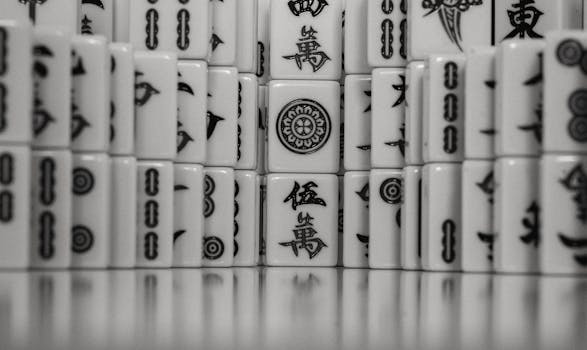
Mahjong, a tile-based game with its roots in Chinese culture, has transformed into a popular gambling activity in Japan, boasting a rich history that spans several decades. Originally developed in China during the Qing dynasty, Mahjong made its way to Japan in the early 20th century and has since seen substantial adaptations in terms of gameplay and cultural integration.
The game was introduced to Japan around the 1920s and swiftly captivated the Japanese audience, who modified it to better suit their cultural preferences. The Japanese version, known as Riichi Mahjong, features distinctive elements such as the 'riichi' declaration and the use of 'dora' tiles, which introduce additional layers of complexity and strategic depth.
.png)
Post-World War II Japan saw the rise of Mahjong parlors, which became a staple of Japanese nightlife in the 1960s and 1970s. These parlors provided a venue for monetary Mahjong games, though the game was also enjoyed as a social pastime and a part of communal gatherings.
Gambling through Mahjong in Japan is subject to local regulations, which vary by region. Despite Japan's strict gambling laws, Mahjong parlors inhabit a legal grey area, largely because the money exchanged is often framed as a "table charge" for the space and amenities, rather than as a direct gambling wager.
The digital era has ushered in significant changes with the introduction of online Mahjong platforms. These platforms allow players to partake in virtual Mahjong games and gamble real money from the comfort of their homes, thereby expanding the game’s accessibility and introducing varied betting dynamics.
Despite its widespread popularity, Mahjong gambling has faced challenges in Japan, including concerns over gambling addiction and financial risks. In response, some local governments have restricted the operational hours of Mahjong parlors and promoted responsible gambling practices.
Culturally, Mahjong holds a significant place in Japanese society. It is perceived not only as a gambling activity but also as a competitive sport and a medium for social bonding. The game enjoys representation in various forms of media, such as television, film, and manga, which highlight the drama and thrill of high-stakes Mahjong.
The evolution of Mahjong gambling in Japan mirrors broader societal changes and shifting attitudes towards gambling. While it continues to be a favored pastime, the practices and regulations surrounding it are in flux. With Japan gradually embracing more legalized gambling forms, including the upcoming introduction of integrated casino resorts, the landscape of Mahjong gambling is poised for further evolution.
In summary, Mahjong’s transition from a traditional Chinese game to a cherished gambling activity in Japan exemplifies its lasting allure and adaptability. Whether played in traditional parlors or through online platforms, Mahjong remains an integral part of Japan’s cultural and entertainment fabric, offering a mix of risks and rewards for its players.