Mahjong is more than just a pastime in China—it’s a captivating blend of strategy, tradition, and social connection. For millions across the country and the Chinese diaspora, mahjong is a beloved activity that bridges generations, sparks spirited competition, and, in many cases, serves as a popular form of gambling. But how did this intricate game evolve into China’s favourite gambling pastime? What rules, rituals, and cultural forces underpin its enduring allure? Let’s unravel the mystery behind mahjong’s remarkable journey from Qing Dynasty origins to modern-day gambling tables.
The Origins of Mahjong: From Imperial Courts to Urban Alleyways
Mahjong’s precise origins are shrouded in legend, but historians agree that the game emerged during the mid- to late-19th century, most likely in the lower Yangtze River region. Some tales trace its roots to card games played during the Qing Dynasty, while others suggest it evolved from earlier domino-style games dating back to 500 BCE.
By the early 20th century, mahjong had spread like wildfire across China’s bustling cities. Its popularity surged for several reasons:
.png) - The game’s rules were easy to learn but hard to master, making it accessible yet endlessly engaging.
- Mahjong sets, with their beautifully carved tiles, became status symbols in affluent households.
- The game fostered social interaction, providing an ideal way for family and friends to bond, gossip, and celebrate festivals.
- The game’s rules were easy to learn but hard to master, making it accessible yet endlessly engaging.
- Mahjong sets, with their beautifully carved tiles, became status symbols in affluent households.
- The game fostered social interaction, providing an ideal way for family and friends to bond, gossip, and celebrate festivals.
By the 1920s, mahjong fever had reached the United States and Europe, as Chinese immigrants and Western enthusiasts introduced the game abroad. Today, mahjong remains a fixture in Chinese communities worldwide, from Beijing tea houses to San Francisco’s Chinatown.
Mahjong as a Gambling Game: How Bets Became Tradition
While mahjong can be played purely for entertainment, its identity as a gambling game is deeply entrenched in Chinese culture. In fact, the vast majority of mahjong games in China involve some form of betting. According to a 2019 survey by the Chinese Academy of Social Sciences, over 60% of regular mahjong players wager money or goods while playing.
But what makes mahjong so ideally suited to gambling? Several factors play a role:
- Fast-paced rounds: A typical game consists of dozens of quick hands, allowing frequent opportunities to win or lose. - Complex scoring: The intricate system of points and bonuses encourages players to strategize and take calculated risks. - Social stakes: Because mahjong is played face-to-face, the thrill of betting is amplified by the reactions of friends and rivals.Bets can range from a few yuan per hand among elderly neighbors to high-stakes games in underground clubs where thousands of dollars can change hands in a night. In many Chinese weddings, mahjong tables are set up for guests, and the money won or lost is seen as a harbinger of luck for the newlyweds.
Despite periodic crackdowns, especially during anti-gambling campaigns, mahjong gambling persists in both urban and rural China. Even in regions where betting is technically illegal, authorities often turn a blind eye to low-stakes games played during holidays or family gatherings.
Mahjong Rules and Gameplay: A Brief Overview
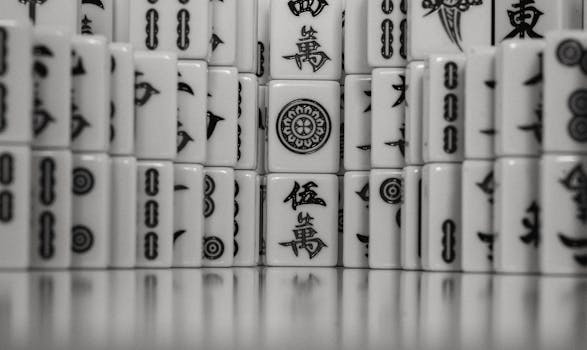
Mahjong is played with a set of 144 tiles, divided into suits (bamboo, characters, and circles), honors (winds and dragons), and bonus tiles (flowers and seasons). Four players take turns drawing and discarding tiles, aiming to complete a winning hand of 14 tiles, typically made up of sets (pungs, chows, and kongs) and a pair.
The rules can vary significantly depending on regional traditions:
- In Hong Kong, the “Old Style” rules emphasize speed and simplicity, with minimal bonus hands. - In Sichuan, the “Blood Flow” version allows players to draw new tiles immediately after a winning hand, keeping the action continuous. - In Taiwan, special scoring rules and “joker” tiles add an extra layer of complexity.Scoring is where the gambling element really shines. Players can rack up points for rare hands (like “Thirteen Orphans” or “Great Dragons”), special combinations, or by declaring “Mahjong” (a winning hand) before their opponents. At the end of each round, chips or money are exchanged based on the difference in scores.
Here’s a simple comparison of popular regional mahjong styles:
| Region | Number of Tiles | Main Features | Gambling Prevalence |
|---|---|---|---|
| Hong Kong | 144 | Quick play, simple scoring | Very High (widespread betting) |
| Sichuan | 108 | No honor tiles, continuous play | High (common in tea houses) |
| Shanghai | 144 | Complex scoring, bonus hands | Moderate (often social betting) |
| Taiwan | 144 + Jokers | Joker tiles, unique scoring | High (popular in clubs) |
Mahjong’s Social and Psychological Impact
The appeal of mahjong gambling is not just about money—it’s deeply rooted in cultural attitudes toward luck, fate, and social interaction. For many Chinese people, playing mahjong is as much about testing one’s fortune as it is about demonstrating wit and resilience.
A study published by the Chinese Journal of Sociology in 2021 found that nearly 75% of elderly urban residents in China play mahjong at least once a week. For retirees, mahjong provides:
- Mental stimulation: The game’s complexity helps maintain memory and cognitive skills. Research by Fudan University in Shanghai showed a 13% slower cognitive decline among elderly mahjong players compared to non-players. - Social cohesion: Mahjong acts as a social glue, helping combat loneliness and foster intergenerational connections. - Emotional release: The excitement of winning, the laughter, and the playful banter offer stress relief and a sense of community.However, the lure of gambling can sometimes lead to obsession or financial hardship. In 2015, the China Social Assistance Foundation reported that 12% of calls to its gambling addiction helpline were related to mahjong, highlighting the need for responsible play and community support.
Mahjong in Pop Culture and Modern Society
Mahjong’s influence extends far beyond the gaming table. It has become a symbol of Chinese identity and resilience, featured in films, TV dramas, literature, and art. Movies like “Crazy Rich Asians” (2018) and the celebrated Hong Kong classic “Fat Choi Spirit” (2002) immortalize the drama and excitement of high-stakes mahjong games.
In recent years, technology has brought mahjong into the digital age. According to Sensor Tower, over 80 million people downloaded mobile mahjong apps in China in 2023 alone, with online rooms allowing players to bet real or virtual currency. These platforms blend traditional gameplay with modern features, such as in-game chat and tournaments, expanding mahjong’s reach to younger generations and overseas fans.
Mahjong tournaments now attract international attention, with the biennial World Mahjong Championship drawing players from as many as 30 countries. The 2019 event in Las Vegas awarded over $50,000 in prizes, highlighting mahjong’s status as both a cultural tradition and a competitive sport.
The Legal Landscape: Mahjong and Gambling Laws in China
China’s stance on gambling is famously strict: all forms of cash gambling are officially illegal outside of a few state-run lotteries and regulated casinos in Macau. Yet, mahjong exists in a legal gray area.
Authorities generally tolerate small, private games played for low stakes—especially during public holidays or family reunions—seeing them as harmless entertainment. However, large-scale or organized gambling can attract serious penalties. In 2021 alone, Chinese police cracked down on over 18,000 illegal gambling venues, with many involving mahjong clubs.
Key facts to consider:
- In most Chinese provinces, organizing a “gambling den” or running for-profit mahjong parlors can result in fines or jail time. - In cities like Chengdu and Chongqing, where mahjong is particularly popular, local governments have issued guidelines to distinguish between “social play” and “illegal gambling.” - Macau remains the only region in China where casino gambling is fully legal, but even there, mahjong gambling is largely overshadowed by baccarat and slot machines.For overseas Chinese communities, legal attitudes vary widely. In the United States, mahjong is often played for fun, though informal betting is common in private games. In Singapore, licensed mahjong clubs offer regulated environments for both social and gambling play.
Final Thoughts: Mahjong’s Enduring Legacy in China’s Gambling Culture
Mahjong is much more than just a game—it’s a living tradition, a social institution, and, for many, a thrilling gambling experience. Its unique blend of skill, chance, and community spirit has ensured its place at the heart of Chinese life for more than a century.
While the legal and social landscape continues to evolve, mahjong’s popularity shows no sign of fading. As technology introduces new ways to play and connect, the game’s core appeal—a test of wits, luck, and camaraderie—remains unchanged. Whether played for small stakes among friends or in the high-stakes world of underground clubs, mahjong remains China’s favourite gambling pastime, a testament to the enduring power of games to unite, challenge, and entertain.